

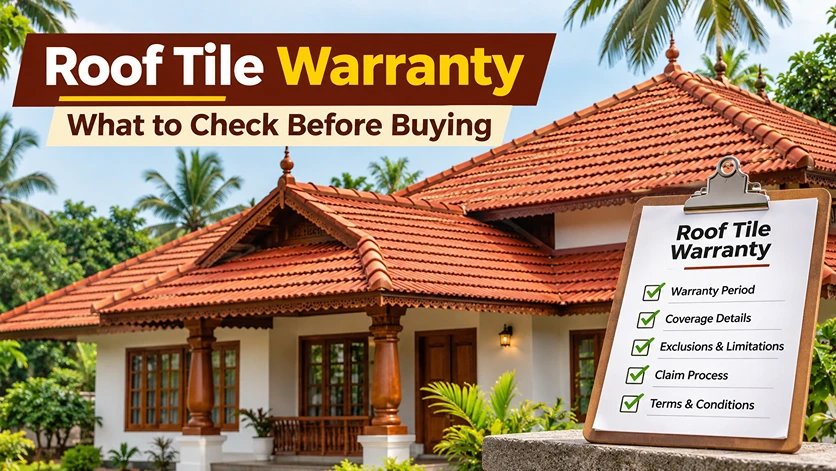
A roof tile warranty is an important factor to consider when buying roofing tiles for your home. While homeowners often focus on tile design, colour, durability, and price, understanding the warranty can help prevent unexpected expenses and confusion in the future.
A roof is a long-term investment. It protects your home from rain, sunlight, wind, and changing weather conditions. However, even good-quality roofing materials may develop problems due to manufacturing defects, improper installation, or external damage.
This is why checking the warranty before purchasing roofing tiles is essential.
For homeowners in Kerala, where roofs face heavy monsoon rainfall, humidity, and strong sunlight, it is particularly important to choose suitable roofing materials and understand the protection provided by the manufacturer.
In this guide, we explain what a roof tile warranty means, what it may cover, common exclusions, and the 10 important things you should check before buying roof tiles.
What Is a Roof Tile Warranty?
A roof tile warranty is a written agreement in which a manufacturer provides specified protection against certain defects in its roofing products.
The warranty explains the conditions under which a manufacturer may repair, replace, or provide another remedy for a defective product.
However, not all roof tile warranties are the same. Coverage depends on the manufacturer, roofing material, product model, and warranty conditions.
Some warranties focus on manufacturing defects, while others may include specific conditions relating to coatings, finishes, or material performance.
A roof tile warranty should not be confused with a guarantee that the entire roof will remain free from leaks or damage.
The key point is simple: always check the written warranty terms for the exact roof tile you plan to purchase.
Why Is a Roof Tile Warranty Important for Homeowners?
Choosing roofing tiles is not just about appearance. It is also about long-term reliability, maintenance, and protecting your construction budget.
A clearly defined roof tile warranty helps homeowners understand what support may be available if an eligible product defect occurs.
Protection Against Manufacturing Defects
Manufacturing defects can sometimes affect roofing materials despite quality-control processes.
A warranty may offer protection against qualifying defects, subject to the manufacturer’s conditions.
Better Understanding of Future Costs
Roof repairs can involve material replacement, labour, transportation, and access equipment.
Knowing which expenses are covered helps homeowners plan for possible future maintenance or repair costs.
Confidence When Comparing Roofing Products
Written warranty information allows buyers to compare products more effectively.
Instead of choosing tiles based only on appearance or advertised warranty duration, homeowners can evaluate the actual coverage and support offered.
Support for Long-Term Roof Maintenance
Warranty documents may also explain recommended maintenance and installation practices.
Following these instructions can help homeowners maintain their roofs and avoid disputes about warranty eligibility.
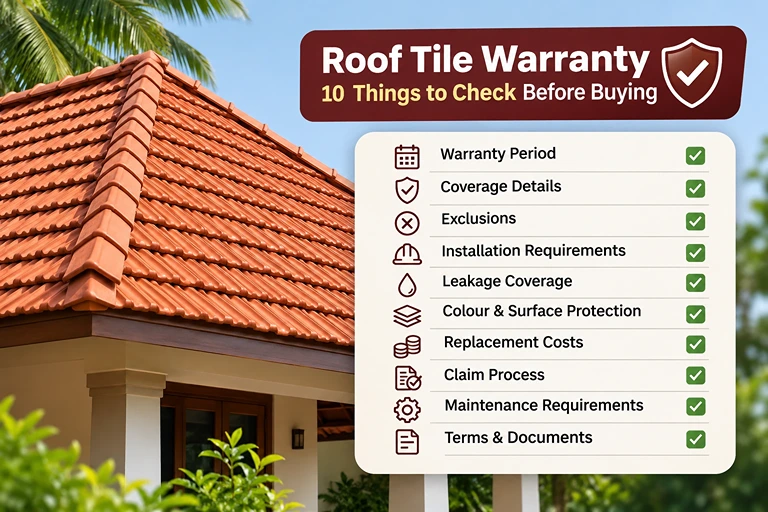
10 Things to Check in a Roof Tile Warranty Before Buying
Before finalizing your roofing material, review these essential warranty details.
1. Check the Warranty Period
The first thing most buyers notice is how long the roof tile warranty lasts.
Different manufacturers and roofing products may have different warranty periods. There is no universal warranty duration that applies to every type of roof tile.
Before buying, ask:
- How many years does the warranty remain valid?
- Does the coverage begin on the purchase date or installation date?
- Is warranty registration necessary?
- Does the protection change over time?
A longer warranty may look attractive, but the duration alone does not determine its value.
A clearly written warranty with useful coverage may be more valuable than a longer warranty with extensive exclusions.
2. Understand What the Warranty Covers
One of the most important steps is checking which defects qualify for warranty protection.
Depending on the manufacturer and roofing product, warranty coverage may address specific manufacturing defects or defined material-performance problems.
Buyers should ask whether the warranty covers:
- Manufacturing defects
- Certain types of cracking
- Specified coating defects
- Material deterioration caused by covered defects
- Particular surface or finish problems
Do not assume that all these issues are covered.
For example, a roof tile may crack because of an eligible manufacturing defect or because someone dropped a heavy object on it. These situations may be treated differently under the warranty.
Request a written explanation of the covered defects before purchasing.
3. Read the Warranty Exclusions Carefully
Warranty exclusions explain which problems are not covered.
These conditions are especially important because homeowners may otherwise assume that every type of roof damage qualifies for replacement.
Depending on the warranty, exclusions may include:
- Improper installation
- Accidental damage
- Damage during transportation
- Structural movement
- Unauthorized alterations
- Extreme weather events
- Incorrect cleaning methods
- Normal surface weathering
For Kerala homes, it is also useful to ask about conditions relating to monsoon exposure, moisture, and coastal environments.
Reading the exclusions helps homeowners understand the limits of the protection being offered.
4. Verify the Installation Requirements
Correct installation is essential for roof performance.
Even good-quality tiles can develop problems if the roofing system is not designed or installed properly.
Some warranties require installers to follow specific manufacturer instructions.
Important installation factors may include:
Roof slope: Roofing tiles must be installed at a suitable slope to support water drainage.
Tile overlap: Proper overlap helps prevent rainwater from entering beneath the roof tiles.
Fixing methods: The correct nails, screws, clips, or other accessories may be required.
Roof structure: The supporting framework must be suitable for the chosen roofing material.
For Mangalore-pattern clay roofing tiles, the Bureau of Indian Standards identifies IS 2858:1984 as a code of practice for roofing with Mangalore tiles.
However, the installation requirements of the selected manufacturer must also be followed.
Ask the supplier whether installation by a particular contractor or according to an approved method is necessary to maintain warranty eligibility.
5. Check Whether Roof Leakage Is Covered
Roof leakage is one of the biggest concerns for homeowners, particularly during Kerala’s monsoon season.
However, a roof tile warranty does not automatically cover every leak.
Water leakage can occur because of several factors, including:
- Improper tile installation
- Damaged flashing
- Incorrect roof slope
- Blocked drainage
- Damaged underlay
- Poorly sealed roof junctions
These issues may be unrelated to a manufacturing defect in the tile itself.
Before buying, confirm whether the warranty covers any specific water-resistance defects and whether the protection applies only to the product or to a broader roofing system.
6. Understand Colour Fading and Surface Protection
Roof tile appearance is important for the overall design of a house.
Clay, ceramic, concrete, and coated roofing products may experience different types of surface changes over time.
Exposure to sunlight, rainfall, airborne particles, and moisture can affect surface appearance.
Some manufacturers may provide coverage for defined coating or finish defects. However, natural fading, weathering, and environmental deposits may be excluded.
If colour retention is important to your home design, ask the manufacturer for written information about the applicable surface-finish warranty.
Also check whether matching replacement tiles are likely to be available in the future.
7. Confirm Whether Replacement Costs Are Included
A major mistake homeowners make is assuming that a warranty covers all costs involved in replacing defective roofing tiles.
A manufacturer may provide replacement materials while excluding associated expenses.
These may include:
- Removing damaged tiles
- Roofing labour
- Transportation
- Scaffolding
- Disposal of old materials
- Reinstallation expenses
For larger homes or roofs with difficult access, these expenses can become significant.
Ask the supplier exactly what happens if a warranty claim is approved.
Will the manufacturer supply replacement tiles only, or will additional costs be included?
Always get the answer in writing.
8. Check the Warranty Claim Process
A warranty is more useful when homeowners know how to make a claim.
Before purchasing, ask how the manufacturer handles warranty complaints.
Important questions include:
- Whom should you contact if a defect occurs?
- What documents are required?
- Will a technical inspection be necessary?
- Who decides whether the claim is valid?
- What remedies are available for approved claims?
Some manufacturers may request photographs, invoices, warranty certificates, or installation records.
Knowing the process beforehand can reduce confusion if a problem occurs later.
9. Ask About Maintenance Requirements
Roof maintenance can influence long-term performance and may affect warranty eligibility.
Depending on the product, manufacturers may specify inspection procedures, cleaning methods, or maintenance restrictions.
For homeowners in Kerala, regular inspections can be especially useful before and after the monsoon season.
Practical maintenance activities include checking for visibly damaged tiles, clearing drainage paths, and inspecting roof accessories.
Avoid using aggressive cleaning chemicals or high-pressure cleaning methods without confirming that they are suitable for the roofing product.
Maintaining basic inspection records and photographs may also be helpful if a warranty claim becomes necessary.
10. Collect the Warranty Documents Before Purchasing
Never rely entirely on verbal statements about warranty protection.
Before making the final payment, request the official product warranty document.
Keep the following records:
- Purchase invoice
- Manufacturer’s warranty certificate
- Product name and model details
- Installation instructions
- Supplier information
- Installation records
- Relevant correspondence
These documents can help establish the product purchased, the applicable terms, and the history of installation.
A written and verifiable warranty is more useful than an informal promise.
How Do Warranties Differ Between Roofing Materials?
Different roofing materials have different properties. As a result, buyers should pay attention to different warranty conditions when comparing products.
Roofing Material | Important Warranty Details to Check |
Clay roof tiles | Manufacturing defects, cracking conditions, installation requirements |
Ceramic roof tiles | Tile integrity, glazing, surface finish, appearance-related exclusions |
Concrete roof tiles | Structural defects, surface weathering, colour-related conditions |
Stone-coated metal tiles | Coating quality, corrosion conditions, fasteners, installation |
Roofing shingles | Material defects, underlay, roof slope, installation requirements |
These are general comparison points, not confirmed warranty promises for a particular product.
For example, homeowners choosing stone-coated metal roofing near coastal areas should pay attention to corrosion-related warranty conditions.
Buyers considering ceramic tiles for modern homes should review surface-finish and colour-related terms.
Those choosing clay roof tiles for traditional Kerala houses should focus on product specifications, installation requirements, and replacement availability.
According to the Bureau of Indian Standards, IS 654:2023 is the Indian Standard specification for Mangalore-pattern clay roofing tiles. Product standards help establish technical requirements but do not determine a manufacturer’s warranty period or coverage.
Learn more about the available options through Asian Roof’s roofing tile collection.
Roof Tile Warranty vs Roof Tile Lifespan: What Is the Difference?
Many homeowners believe that the warranty period and the expected lifespan of roof tiles are the same.
However, these terms have different meanings.
Roof tile warranty: The period during which the manufacturer provides specified protection under its written warranty terms.
Roof tile lifespan: The period during which the roofing material may remain functional under actual conditions.
Roof tile lifespan can depend on several factors:
- Material quality
- Roof design
- Installation methods
- Weather conditions
- Maintenance practices
- Environmental exposure
A roof tile may remain functional long after its warranty expires.
Likewise, a long warranty does not guarantee that the roof will never need maintenance or repairs.
Homeowners should therefore consider the product’s suitability and warranty conditions separately.
Why Roof Tile Warranty Matters in Kerala's Climate
Kerala’s weather creates specific challenges for roofing systems.
Heavy seasonal rainfall, high humidity, strong sunlight, and coastal exposure can influence roofing material selection and maintenance requirements.
Heavy Monsoon Rainfall
During the monsoon, roofs must direct large amounts of rainwater away from the building.
Suitable roof slope, correct tile overlap, functional drainage, and proper installation all contribute to effective roof performance.
Heat and Sunlight
Roofing materials are exposed to repeated heating and cooling.
Buyers should consider whether the chosen material and finish suit local conditions and review any relevant manufacturer performance information.
Humidity and Surface Deposits
Humidity, nearby vegetation, and environmental deposits can affect roof appearance and maintenance needs.
Homeowners should confirm whether surface changes are considered normal weathering or covered defects.
Coastal Conditions
Buildings near the coast may experience salt exposure.
For roofing systems with metal components, buyers should review corrosion-related product specifications and warranty restrictions.
For Kerala homeowners, the right roofing solution should combine suitable materials, proper installation, drainage planning, and clearly defined warranty protection.
Common Mistakes Homeowners Make When Checking Roof Tile Warranties
Understanding common mistakes can help homeowners make better purchasing decisions.
Choosing the Longest Warranty Without Reading the Terms
An advertised warranty period does not explain everything about the protection provided.
Always compare covered defects, exclusions, claim procedures, and replacement responsibilities.
Assuming Every Crack Is Covered
A cracked tile is not automatically a manufacturing defect.
The cause of damage and the warranty conditions determine whether a claim may qualify.
Ignoring Installation Requirements
Incorrect installation can affect roof performance and may also affect warranty eligibility.
Ensure that the installation method is appropriate for the selected roofing product.
Assuming Maintenance Is Unnecessary
A warranty does not mean that homeowners can ignore roof maintenance.
Regular inspections can help identify problems before they become more serious.
Failing to Keep Documents
Without the purchase invoice or relevant warranty records, making a claim may become more difficult.
Keep both physical and digital copies of important documents.
Roof Tile Warranty Checklist Before Buying
Use this simple checklist when comparing roofing products.
- Confirm the warranty period.
- Read the complete coverage terms.
- Review all warranty exclusions.
- Check the manufacturer’s installation requirements.
- Ask whether leakage is covered.
- Verify colour and coating conditions.
- Confirm who pays replacement labour and transportation costs.
- Understand the warranty claim process.
- Review maintenance requirements.
- Collect the written warranty and purchase documents.
For builders managing multiple homes or larger residential projects, these checks should form part of the material approval process.
The supplier, installer, and project owner should understand their respective responsibilities before construction begins.
Frequently Asked Questions About Roof Tile Warranty
❓How long does a roof tile warranty last?
The roof tile warranty period depends on the manufacturer, product model, and roofing material. There is no fixed warranty duration for all roof tiles. Buyers should check the official warranty document before purchasing.
❓Does a roof tile warranty cover water leakage?
Not always. A warranty may cover certain manufacturing defects, but leakage caused by poor installation, flashing problems, or unsuitable roof design may be excluded. Check whether the warranty applies to the tile alone or a complete roofing system.
❓Are cracked roof tiles covered under warranty?
Cracked tiles may qualify for warranty protection if the cracking results from a covered manufacturing defect. Damage caused by external impact, improper handling, or incorrect installation may not be covered.
❓Does a roof tile warranty cover colour fading?
Some warranties may cover specified coating or surface-finish defects. However, normal fading and environmental weathering may be excluded. Always verify the applicable product-specific conditions.
❓Can improper installation affect a roof tile warranty?
Yes. Some manufacturers require their products to be installed according to specified instructions. Failure to follow these requirements may affect warranty eligibility.
❓What documents are needed for a roof tile warranty claim?
Manufacturers may request the invoice, warranty certificate, product details, photographs, and installation records. Additional inspection information may be necessary depending on the claim.
❓ Is a roof tile warranty transferable to a new homeowner?
Transferability depends on the warranty policy. Some manufacturers may allow transfers under specific conditions, while others may restrict coverage to the original purchaser.
A roof tile warranty is an important consideration when investing in roofing materials for your home. However, choosing the right roofing product requires more than comparing warranty periods.
Before purchasing, understand the coverage, exclusions, installation requirements, maintenance conditions, and claims process. Confirm whether the manufacturer covers replacement materials alone or additional repair expenses.
For homeowners in Kerala, it is equally important to select roofing materials suited to local weather conditions and ensure proper roof installation.
Making an informed decision today can help reduce unexpected expenses and make future roof maintenance easier.
Asian Roof offers roofing material options and guidance for homeowners, architects, and builders across Kerala.
To compare roofing options and discuss the warranty terms applicable to your chosen product, visit Asian Roof.
Choose roofing tiles based on quality, suitability, proper installation, and clear warranty protection—not warranty duration alone.
Choose Quality Roof Tiles with Confidence!
Planning your dream home? Explore quality roofing solutions at Asian Roof and get expert guidance on choosing the right tiles and understanding warranty coverage.
Explore Roofing Solutions Today →