

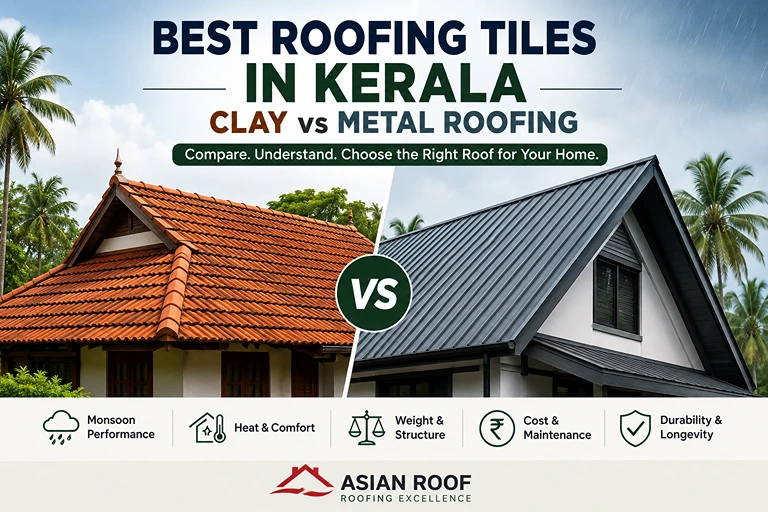
Choosing the best roofing tiles in Kerala is not just about colour, style, or price. Kerala roofs must handle heavy monsoon rain, humidity, heat, wind, and long periods of moisture.
For many homeowners, the choice comes down to two popular options: clay roof tiles and metal roofing.
The short answer is simple:
- Clay roof tiles are worth considering if you want traditional Kerala aesthetics, quieter rain performance, natural roof character, and easier replacement of individual tiles.
- Metal roofing is worth considering if you need lower roof weight, faster installation, renovation flexibility, or quicker coverage of a large roof.
Neither is the best choice for every house. Your roof structure, location, slope, drainage, exposure, comfort needs, and budget should guide the final decision.
Clay vs Metal Roofing in Kerala: Quick Comparison
| Factor | Clay Roof Tiles | Metal Roofing | Kerala Consideration |
|---|---|---|---|
| Structural Weight | Generally heavier | Generally lighter | Metal can suit weight-sensitive renovations |
| Monsoon Performance | Good with correct slope and tile overlap | Good with correct laps, flashing, and fasteners | Installation quality matters for both |
| Heat | Can perform well with ventilation | Can perform well with insulation and reflective finishes | Compare the full roofing system |
| Rain Noise | Usually more subdued | Can be louder without insulation | Clay may suit noise-sensitive homes |
| Installation Speed | More individual units to install | Usually faster | Metal can reduce installation time |
| Maintenance | Check tiles, moss, gutters, and drainage | Check fasteners, seals, flashing, and coatings | Both require periodic inspection |
| Local Repairs | Individual tiles can often be replaced | Repairs may involve larger sections | Clay can make small repairs easier |
| Wind Exposure | Correct tile and edge fixing matters | Correct fastener spacing and edge fixing matters | Both need proper wind detailing |
| Coastal Use | Check clips, flashings, and support components | Coating and fastener choice are especially important | Specification matters near the coast |
Mangalore-pattern clay roofing tiles are covered by IS 654:2023, while pre-painted galvanized steel roofing is covered by IS 14246:2024.
The better comparison is therefore not simply tile price versus sheet price. Compare the complete installed roofing system.
When Clay Roof Tiles Make More Sense
Clay roof tiles remain a natural choice for many Kerala homes, particularly where the roof is an important part of the architecture.
Clay may suit your home when you want:
- Traditional Kerala-style appearance
- Natural terracotta character
- Quieter sound during heavy rain
- Individual tile replacement
- A sloping roof designed for clay tiles
Clay tiles can work especially well on villas, traditional houses, verandas, and homes where the roof remains clearly visible from outside.
One important consideration is weight. Clay roofing is generally heavier than metal roofing, so the supporting structure must be suitable for the selected tile system.
This is particularly important when replacing an existing lightweight roof.
When Metal Roofing Makes More Sense
Metal roofing can be a practical option for new homes, renovations, extensions, and projects where reducing roof weight is important.
Metal may be more suitable when you want:
- Lower structural weight
- Faster installation
- Faster coverage of larger roof areas
- Renovation flexibility
- A modern or tile-effect roof appearance
However, metal roofing is not one standard product.
The coating, panel specification, fasteners, flashing, insulation, and installation method can all affect performance.
For homes near Kerala’s coast, ask specifically about coating suitability, fasteners, cut-edge protection, and warranty conditions.
Kerala Monsoon: Which Roof Performs Better?
Kerala receives about 3,000 mm of rainfall in an average year, with around 68% of annual rainfall associated with the southwest monsoon.
Both clay and metal roofing can perform well in these conditions when properly designed and installed.
For clay roofs, important factors include:
- Correct roof slope
- Proper tile overlap
- Secure tile placement
- Ridge detailing
- Flashing
- Drainage
For metal roofing, important factors include:
- Correct panel or sheet overlaps
- Suitable fasteners
- Proper flashing
- Valley detailing
- Ridge detailing
- Sealing around roof penetrations
Gutters and downpipes also matter.
A good roofing material cannot compensate for blocked drainage or badly designed water flow during heavy monsoon rain.
Which Roof Keeps a Kerala Home Cooler?
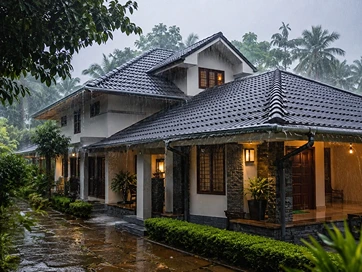
It is misleading to say that clay is always cool or metal is always hot.
Clay roofs can benefit from the construction depth and ventilation beneath the tiles.
Metal roofing can also perform well when combined with suitable insulation, ventilation, reflective finishes, and ceiling design.
The Bureau of Energy Efficiency’s Eco-Niwas Samhita 2024 treats roof heat performance as more than a material choice. Surface properties, insulation, ventilation, and the overall roof construction influence how much heat enters the house.
For homeowners, the practical lesson is straightforward:
Do not compare roofing materials without also discussing insulation and ventilation.
This is especially important for bedrooms and living areas directly below a sloping roof.
What About Wind Exposure?
Roof fixing becomes particularly important on open plots, exposed hillsides, and coastal properties.
Clay roof tiles need suitable fixing, particularly around:
- Eaves
- Corners
- Ridges
- Exposed roof edges
Metal roofing requires attention to:
- Fastener type
- Fastener spacing
- Laps
- Roof edges
- Supporting structure
Indian wind-load guidance under IS 875 Part 3 covers wind effects on roofs and their fixings.
The important point for a homeowner is that adding more screws or using heavier tiles does not automatically make a roof safer. The fixing method should suit the roof design and location.
Is Metal Roofing Suitable for Coastal Kerala?
Metal roofing can be used in coastal areas, but product specification becomes more important.
Before choosing metal roofing near the coast, ask about:
- Coating system
- Fastener material
- Cut-edge protection
- Flashing material
- Warranty conditions for coastal exposure
Clay does not have the same large exposed metal surface, but a clay roof can still contain metal clips, nails, flashing, or structural components that may be affected by corrosion.
For coastal homes, evaluate the entire roofing system rather than only the visible roof covering.
Structural Weight: An Important Renovation Factor
Clay roofing is generally heavier than metal roofing.
That difference matters most when renovating an older home or replacing an existing lightweight roof.
Metal roofing may be attractive when keeping additional structural load low is a priority.
If you want to change from a lightweight roof to clay tiles, the supporting structure should be checked before installation.
Professional review advised where the project involves significant changes to roof weight or structure.
Cost: Clay Tiles vs Metal Roofing
Do not compare quotations only by the cost of one clay tile or one metal sheet.
A complete roof may also include:
- Supporting structure
- Battens or purlins
- Underlay
- Insulation
- Ridge pieces
- Flashing
- Fasteners
- Gutters
- Downpipes
- Labour
- Transport
Metal roofing may offer faster installation and lower structural weight in suitable projects. However, adding premium coatings, insulation, underlay, and accessories can increase the final cost.
Clay roofing may involve more individual installation work and may require a stronger supporting structure.
The best approach is to compare quotations for the same roof area and the same scope of work.
Maintenance: Which Roof Is Easier to Manage?
Both clay and metal roofs need periodic inspection.
For clay roofing, homeowners may need to check:
- Cracked or displaced tiles
- Moss growth
- Leaves and debris
- Valleys
- Gutters
For metal roofing, check:
- Fasteners
- Sealants
- Flashing
- Coating condition
- Areas where water or debris collects
Homes surrounded by trees may require more frequent gutter and roof cleaning regardless of the material.
Also ask for the roofing warranty in writing.
Check what it covers, what it excludes, and whether installation methods or coastal exposure affect the warranty.
Common Roofing Mistakes to Avoid
Many expensive roofing problems begin before installation.
Avoid these common mistakes:
- Choosing based only on price
- Comparing tile cost directly with sheet cost
- Ignoring structural capacity
- Ignoring recommended roof slope
- Accepting quotations without flashing details
- Using unspecified fasteners
- Forgetting gutters and drainage
- Selecting metal roofing without checking coating details
- Increasing roof weight without structural assessment
- Accepting only a verbal warranty
- Selecting colour before checking technical suitability
Myth vs Fact
Myth: Clay roofs always leak during Kerala monsoon.
Fact: Leaks can result from unsuitable roof slope, damaged or displaced tiles, poor flashing, or installation problems.
Myth: Metal roofing always makes the house too hot.
Fact: Roof colour, reflective finishes, insulation, ventilation, and ceiling design can significantly change heat performance.
Myth: A heavier roof is automatically stronger.
Fact: Roof weight and structural strength are different. The supporting structure must be suitable for the chosen roofing system.
How to Choose the Best Roofing Tiles in Kerala
Before deciding between clay and metal, answer these questions about your house.
Check the Roof
- What is the total roof area?
- What is the roof slope?
- Can the existing structure support the selected roofing material?
- Does the house face strong wind exposure?
- Is the property close to the coast?
- Are there large trees around the roof?
- How will rainwater drain from the roof?
Think About Comfort
Consider whether these are important to you:
- Lower rain noise
- Indoor heat control
- Traditional appearance
- Low structural weight
- Faster installation0.
- Easy local repairs
Compare Complete Quotations
Ask each supplier to quote for the same roof area and scope.
Check whether the quotation includes:
- Structural work
- Roofing material
- Underlay
- Insulation
- Ridge pieces
- Flashing
- Fasteners
- Gutters and drainage
- Labour
- Transportation
- Warranty
This gives you a much more useful comparison than looking only at material prices.
Clay or Metal: Which Should You Choose?
For many Kerala homeowners, the decision can be narrowed down like this:
Choose clay roof tiles when traditional Kerala appearance, quieter rain performance, natural roof character, and individual tile replacement are major priorities.
Choose metal roofing when lower roof weight, faster installation, large-area coverage, and renovation flexibility are more important.
There is no universal winner.
The best roofing tiles in Kerala are the ones that suit your particular house, location, roof structure, exposure, comfort expectations, maintenance requirements, and budget.
Need Help Choosing the Right Roofing System?
Still unsure whether clay roof tiles or metal roofing suit your home?
Asian Roof can help you compare roofing options based on your roof area, slope, structure, location, drainage, material choice, accessories, and installation requirements.
A project-specific comparison makes it easier to understand the practical differences and complete roofing cost before you make a final decision.
Contact Asian Roof for a project-specific roofing consultation and quotation.
Frequently Asked Questions
What are the best roofing tiles in Kerala?
There is no single best roofing material for every Kerala home. Clay tiles are often preferred for traditional appearance and quieter rain performance, while metal roofing can suit lightweight structures, renovations, and faster installation.
Are clay tiles better than metal roofing in Kerala?
Clay may be better when traditional design, natural roof character, and rain-noise comfort are priorities. Metal may be more suitable when lower structural weight and faster installation matter more.
Is metal roofing too hot for Kerala homes?
Not necessarily. Roof colour, reflective coating, insulation, ventilation, and ceiling design can all affect indoor heat. A properly planned metal roof can perform very differently from an uninsulated metal sheet.
Are clay tiles safe during strong winds?
They can be when the roof design and fixing method suit the location. Roof edges, ridges, and corners require particular attention in exposed areas.
Is metal roofing suitable for coastal Kerala?
Yes, but the product must be suitable for the exposure. Check the coating, fasteners, cut-edge protection, flashing, and coastal warranty conditions before choosing.
Which roof is cheaper to maintain?
It depends on the installation and local conditions. Clay roofs may need damaged tiles replaced, while metal roofs require checks of fasteners, seals, flashing, and coatings.
Are stone-coated metal tiles different from normal roofing sheets?
Yes. Stone-coated metal tiles use a profiled metal base with a decorative and protective surface finish that creates a tile-like appearance. Product specifications and warranty conditions vary, so compare the actual products before choosing.
Need Help Choosing the Right Roof?
Asian Roof can help you choose the right roofing option based on your home, location and budget.
Get Free Roofing Consultation →