

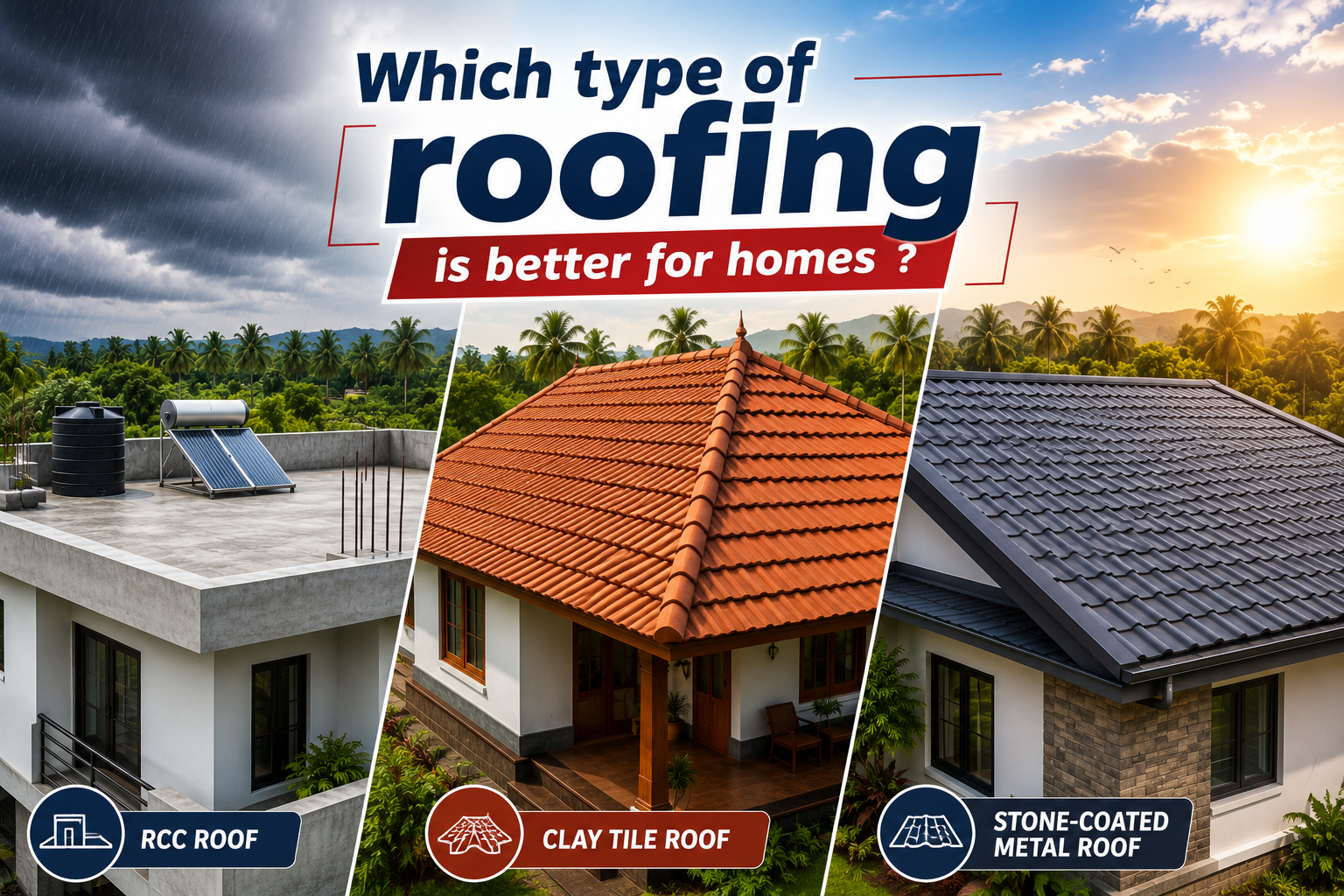
The best roofing choice depends on local climate, structural needs, indoor comfort, installation quality, and long-term maintenance.
Choosing the best roofing for homes is not simply a decision between concrete, clay tiles, and metal sheets. A roofing material that performs well in one location may perform poorly in another.
A roof in Kerala may need to handle long periods of heavy rain and humidity. A roof in a hot inland area may need stronger heat protection. Coastal homes must consider salt exposure and corrosion. Homes in windy locations need proper structural support and fixing methods.
For many permanent homes, RCC is the most flexible option. Clay tiles are useful for sloping roofs that need natural ventilation. Coated metal roofing is suitable when low structural weight and fast installation are priorities.
The best roof is the one that suits the complete building system.
Roofing Must Be Selected as a Complete System
Roofing performance depends on material, slope, insulation, ventilation, drainage, and installation quality.
A premium roofing material can still leak when flashings, valleys, overlaps, or fasteners are installed incorrectly. In the same way, an RCC slab may develop water damage when outlets are blocked or waterproofing is weak.
Homeowners should compare complete roofing systems rather than individual materials.
A complete roofing quotation should include the main roofing material, structural frame, fasteners, washers, ridge pieces, flashings, gutters, rainwater outlets, insulation, ceiling requirements, labour, transport, warranty, and maintenance instructions.
Unpopular truth: Many roof failures blamed on the material are actually caused by poor installation or drainage.
Which Type of Roofing Is Better for Homes?
For most permanent urban and semi-urban homes, RCC remains the safest general choice. It provides structural strength and allows homeowners to use the terrace for water tanks, solar panels, drying clothes, or future construction.
For most permanent urban and semi-urban homes, RCC remains the safest general choice. It provides structural strength and allows homeowners to use the terrace for water tanks, solar panels, drying clothes, or future construction.
RCC is not automatically the coolest option. A bare concrete terrace can absorb a large amount of solar heat. Reflective finishes, insulation, shading, or a ventilated secondary roof may be needed.
Clay tiles can provide better natural comfort when installed over a properly ventilated sloping structure. They also suit traditional home designs.
Coated metal sheets are lighter and faster to install. However, metal roofing over occupied rooms usually requires insulation, ventilation, and a suitable ceiling.
The choice should be based on how the room below the roof will be used.
Roofing Comparison
Compare the full installed roof, not only the material price per square foot
| Roofing Type | Main Benefit | Main Limitation | Best Use | Review Date |
|---|---|---|---|---|
| RCC Slab | Strong, durable, and suitable for a usable terrace. | Can absorb heat and may need waterproofing and insulation. | Permanent homes, terrace spaces, and future floor expansion. | July 2026 |
| Clay Tiles | Provides good natural comfort and supports better ventilation. | Requires proper roof slope, skilled installation, and strong support. | Traditional pitched homes in hot and high-rainfall regions. | July 2026 |
| Insulated Metal Roofing | Lightweight, fast to install, and suitable for long roof spans. | Needs insulation, ventilation, and noise control for occupied rooms. | Home extensions, upper roofs, verandas, and lightweight structures. | July 2026 |
| Fibre Cement | Practical for selected utility spaces and secondary structures. | Product composition and compliance must be checked before use. | Sheds, storage spaces, utility areas, and non-living structures. | July 2026 |
| Polycarbonate | Allows natural daylight and is easy to use in small covered areas. | Can increase indoor heat, glare, and discomfort in sunny locations. | Small patios, walkways, entrance areas, and daylight sections. | July 2026 |
These comparisons are general guidance. Actual roof performance depends on product quality, structural design, insulation, ventilation, local climate, drainage, and installation workmanship.
Is RCC Roofing Better Than Metal Roofing?
RCC is stronger and more flexible, while metal roofing is lighter and faster to install.
RCC is generally better for a permanent house when the homeowner needs a usable terrace or plans to add solar panels, water tanks, or another floor.
Metal roofing is often better for car porches, verandas, home extensions, terrace covers, lightweight upper structures, and buildings with short construction schedules.
RCC construction takes more time because it requires reinforcement, shuttering, concrete placement, and curing. Metal roofing can be installed faster when the supporting frame is ready.
The trade-off is that metal sheets may transfer more heat and rain noise unless the roof includes insulation, ventilation, and a ceiling.
A metal roof should not be selected only because its starting price is lower. The final price must include the frame, insulation, ceiling, flashings, gutters, and installation.
Which Roof Keeps a Home Cooler?
A ventilated clay-tile roof or insulated reflective roof can reduce heat entering the home.
Clay tiles can provide good natural comfort because the roof normally includes a slope and an air space. Warm air can move through the ventilated roof instead of entering the room directly.
An RCC roof can also be made more comfortable with reflective roof coatings, terrace tiles, roof insulation, shading structures, professionally designed roof gardens, or a ventilated roof above the slab.
Metal roofing can work over bedrooms and living spaces when it includes a light-coloured exterior coating, suitable insulation, an air gap, ridge ventilation, eave ventilation, a ceiling layer, and condensation control.
A dark metal sheet installed directly above a bedroom may create uncomfortable afternoon heat.
Trade-off: Better insulation increases the initial cost but can improve comfort and reduce cooling demand.
Which Roofing Is Best for Heavy Rain?
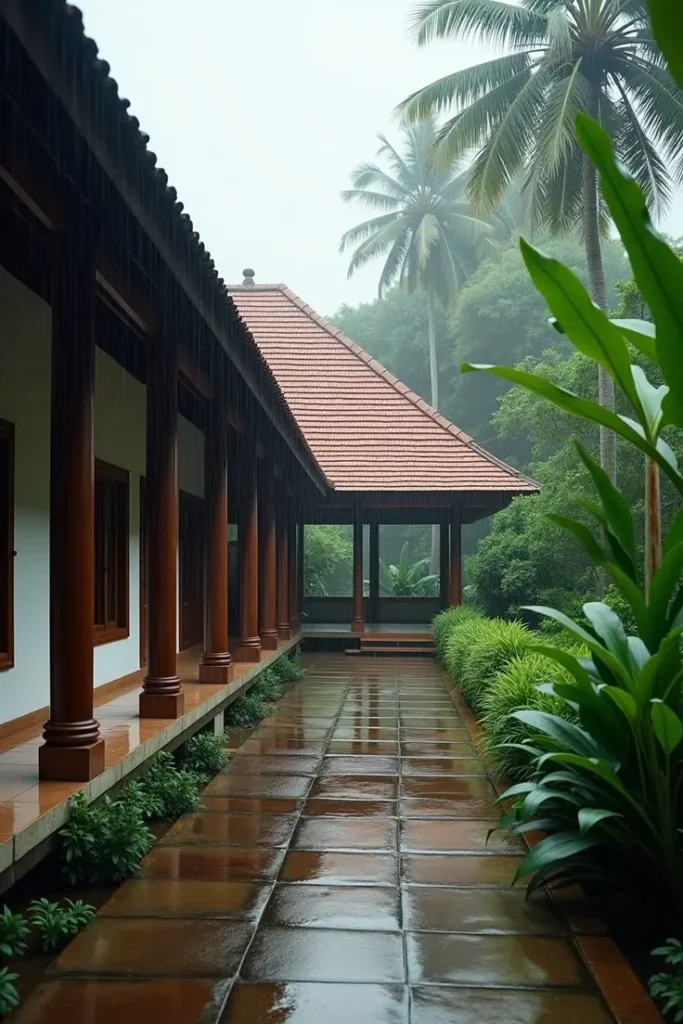
Heavy-rain performance depends on slope, overlaps, flashings, gutters, and outlet capacity.
Pitched metal and tile roofs can move rainwater away quickly. RCC roofs can also perform well during heavy rainfall when the surface has the correct slope and enough outlets.
Common leakage points include roof valleys, ridge joints, wall connections, parapet joints, fastener holes, skylight edges, chimney openings, gutter joints, and blocked outlets.
In high-rainfall areas, gutters and outlets should be cleaned before the monsoon. Damaged washers, cracked tiles, and loose flashings should be repaired early.
Local detail: In Kerala, a small blocked rainwater outlet can create serious dampness even when the main roof material is in good condition.
Are Clay Tiles Good for Homes?
Clay tiles suit ventilated pitched roofs in hot and rainy regions
Clay tiles remain a practical option for homeowners who want natural comfort and a traditional appearance.
Their main advantages are good heat control with ventilation, fast rainwater drainage, attractive appearance, individual tile replacement, and suitability for sloping roofs.
Their limitations include higher weight than many metal sheets, the need for a suitable support structure, breakage risk, skilled installation, movement during strong winds, and the need for proper underlay in areas with wind-driven rain.
Clay tiles are not ideal for every building. The structure must be designed to take the load, and the roof slope must match the selected tile.
Are Metal Roofing Sheets Suitable for Homes?
Metal roofing is suitable for homes when heat, sound, corrosion, and condensation are properly controlled.
Coated steel and aluminium-zinc sheets are widely used for sloping home roofs, extensions, verandas, and terrace covers.
Their main advantages are low structural weight, fast installation, easy rainwater drainage, colour choices, and suitability for long roof spans.
Their main concerns are heat transfer, rain noise, condensation, corrosion, fastener failure, and scratches at cut edges.
Homeowners considering Asianroof should request the complete technical specification instead of choosing only by colour or price.
Ask for written details about sheet thickness, base metal, coating type, coating mass, fastener type, washer quality, insulation options, coastal-use conditions, product warranty, and installation warranty.
Unpopular truth: A high-quality sheet may still fail when low-grade fasteners or incorrect overlaps are used.
What Is the Best Roofing for Coastal Homes?
Coastal roofing must account for salt exposure, humidity, wind, and fastener corrosion.
Coastal air contains salt and moisture that can increase corrosion risk. Metal roofing products used near the sea must have suitable coatings and compatible accessories.
Homeowners should ask whether the warranty changes according to the distance from the coastline.
Special attention is required at cut edges, scratched areas, fastener holes, gutter connections, overlaps, places where two different metals touch, and areas where water remains trapped.
RCC and clay tiles avoid some sheet-corrosion concerns, but they still need proper waterproofing, wind resistance, and drainage.
The supplier should inspect the location before recommending a product.
Common Roofing Myths
Roof thickness alone does not determine comfort, strength, or service life.
A common myth is that a thicker roof is always cooler. In practice, colour, ventilation, insulation, and exposure also affect indoor temperature.
Another myth is that metal roofs always leak. Correctly installed metal roofs can drain rain effectively. Leaks are often caused by damaged washers, poor overlaps, or weak flashing details.
Some homeowners believe that RCC roofs require no maintenance. RCC terraces still need inspection for cracks, blocked outlets, and waterproofing damage.
Clay tiles are sometimes treated as outdated. They remain useful where sloping roofs, skilled installers, and ventilation are available.
The cheapest roof is also not always the most affordable over its full service life. Repair and replacement costs should be considered.
Common Mistakes and Red Flags
Missing specifications and verbal warranties are major warning signs in roofing quotations.
Avoid quotations that use unclear terms such as “premium sheet” or “best quality material” without technical details.
Other warning signs include missing sheet thickness, missing coating information, absent structural details, no discussion of wind load, optional insulation for occupied rooms, sealant used to hide poor joint design, verbal warranties, no older project references, unsafe removal of old cement sheets, missing gutters, and promises of zero maintenance.
Do not approve installation until the quotation lists all materials and work clearly.
Start With the Room Below the Roof
Bedrooms, kitchens, terraces, and car porches need different roof assemblies.
Consider a west-facing bedroom under a dark metal sheet. When the sheet is installed without insulation, ceiling space, or ventilation, the room may become hot during the afternoon. Heavy rain may also create noticeable noise.
The same roofing material can perform better when the homeowner chooses a light finish, adds insulation, and leaves a ventilated space above the ceiling.
A car porch does not require the same comfort level as a bedroom. A terrace cover does not need the same structural capacity as an RCC slab designed for future construction.
During home projects, roofing budgets are sometimes reduced after spending more on floors, kitchens, and interiors. This can create leakage or heat problems that later damage those finishes.
The complete roof assembly should be decided before interior work begins.
Roof Selection Framework
Choose a roof by climate, structure, room use, maintenance, and supplier evidence.
| Factor | Key Question | Evidence Needed | Main Risk | Check Stage |
|---|---|---|---|---|
| Climate | Is the area hot, rainy, windy, or coastal? | Site details, local weather records, rainfall pattern, wind exposure, and distance from the coastline. | Choosing a roofing material that cannot handle local heat, rain, wind, humidity, or salt exposure. | Planning |
| Structure | Can the building safely carry the roof weight? | A structural engineer’s written advice, load calculations, and details of the supporting walls, beams, and columns. | Cracks, movement, structural damage, or failure caused by an unsuitable roofing load. | Before Purchase |
| Room Use | Is the space occupied, air-conditioned, or only used as a utility area? | Floor plan, room-use plan, ventilation details, ceiling design, and insulation requirements. | Excessive heat, rain noise, glare, condensation, or discomfort inside occupied rooms. | Design |
| Maintenance | Who will inspect, clean, and repair the roof after installation? | A maintenance schedule, inspection checklist, supplier instructions, and details of accessible gutters and outlets. | Blocked drainage, loose fasteners, damaged coatings, leaks, and early roof failure. | Before Handover |
| Supplier | Are the product specifications, installation details, and warranties provided in writing? | Technical data sheets, detailed quotation, product warranty, installation warranty, and completed project references. | Hidden costs, poor-quality materials, unclear responsibilities, and disputes after installation. | Before Contract |
This framework helps homeowners avoid choosing a roof based only on appearance or starting price. The final decision should consider local climate, structural safety, indoor comfort, maintenance needs, and written supplier evidence.
Checklist Before Selecting Roofing
Installation checks should be completed before hidden roof components are covered.
Do this now
- Confirm the roof slope.
- Approve the drainage route.
- Check the structural frame.
- Confirm overlap measurements.
- Verify fastener and washer quality.
- Check insulation placement.
- Confirm ventilation openings.
- Inspect wall and valley flashings.
- Photograph hidden work.
- Collect invoices and warranty papers.
- Schedule an inspection before the next monsoon.
Proof you keep: Dated photographs, inspection records, product labels, invoices, and warranty documents.
There is no single best roof for every home or every Indian climate.
Choose RCC when the home needs structural strength, terrace use, and future flexibility.
Choose clay tiles when the building has a suitable sloping structure and natural cooling is important.
Choose insulated coated metal roofing when low weight, fast installation, and long spans are priorities.
Avoid placing bare metal sheets directly over bedrooms and living rooms without insulation and ventilation.
Use transparent roofing only in small areas because it may increase glare and heat.
Do not disturb an old cement roof until the product composition has been professionally checked.
The final roof should be approved by a qualified structural professional and installed according to the selected manufacturer’s technical instructions.
Professional review advised.
Frequently Asked Questions
The best roofing choice depends on the home’s structure, local climate, room use, heat control, drainage, and installation quality.
Is RCC better than metal roofing?
RCC is generally better for permanent homes that require a usable terrace or future construction options. Metal roofing is better when low structural weight and quick installation are more important.
Which roof keeps a home coolest?
Ventilated clay tiles can provide good natural comfort. Insulated metal roofs and treated RCC roofs can also perform well when colour, ventilation, and shading are considered.
Which roof is best for Kerala homes?
RCC, clay tiles, and insulated metal roofs can all work in Kerala. The final choice should account for heavy rain, humidity, wind, drainage, and access to skilled installers.
Can metal roofing be used above a bedroom?
Yes. It should include suitable insulation, ventilation, condensation control, and a ceiling to manage heat and rain noise.
Do light-coloured roofs reduce heat?
Light and reflective surfaces generally absorb less solar heat than dark surfaces. Their performance depends on cleanliness, ageing, climate, and the complete roof assembly.
Which roof needs the least maintenance?
No roofing system is maintenance-free. RCC needs checks for cracks and waterproofing. Tile roofs need checks for broken pieces. Metal roofs need checks for corrosion, fasteners, and damaged coatings.
Choose the Right Roof for Your Home
Get a roofing recommendation based on your location, design and budget.
Talk to Asianroof