

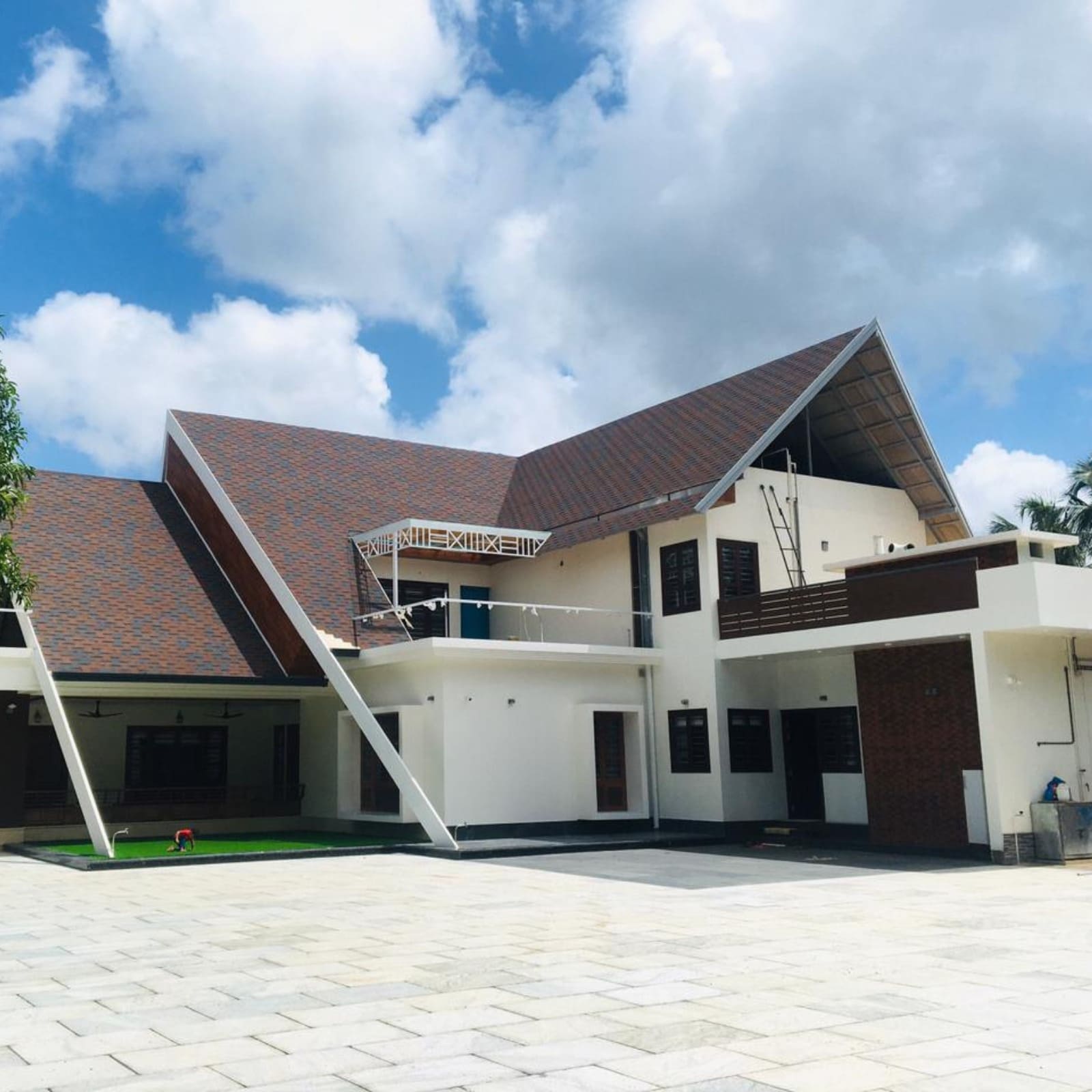
“The best Kerala roof tile is the one that drains rain fast and matches the roof structure”
Tiles commonly used in Kerala houses include Mangalore clay tiles, ceramic roof tiles, stone-coated metal tiles, concrete tiles, shingles, and clay decorative tiles. These are mainly used on sloped roofs because Kerala homes face heavy rain, humidity, heat, and moss growth.
A roof tile should not be chosen only by price or colour. In Kerala, the roof must handle monsoon rain, afternoon heat, wind, and long-term maintenance. The India Meteorological Department says the southwest monsoon normally sets in over Kerala around 1 June and then moves northwards across India.
That timing matters for homeowners. Roof tile work, gutter work, ridge sealing, and valley treatment should ideally be planned before peak rain. Once heavy rain starts, even small roof mistakes can become leaks.
This blog focuses on roof tiles. For floor tiles, Kerala homes commonly use vitrified tiles, ceramic tiles, granite, anti-skid bathroom tiles, and terracotta-style outdoor tiles.
Context And Why It Matters
“In Kerala, roof detailing often matters more than the tile material itself.”
Kerala roof tile selection should begin with one question: where will the rainwater go?
If water moves smoothly from roof tile to gutter to downpipe, the roof is safer. If water collects near the ridge, valley, wall joint, or roof edge, even a costly tile can fail.
BIS, the Bureau of Indian Standards, describes itself as India’s national standards body and says it develops and publishes Indian Standards. For homeowners, this means product quality and test details should be checked where relevant.
For Mangalore-pattern clay roofing tiles, IS 654:2023 is listed as “Clay Roofing Tiles, Mangalore Pattern—Specification” by the Bureau of Indian Standards.
Local detail: in Malappuram, Perinthalmanna, Thrissur, Kozhikode, Kochi, and Kottayam, many homeowners choose roof tiles based on elevation style first. That is understandable, but not enough. A roof tile that looks beautiful from the road can still fail if the water path is weak.
Unpopular truth: a well-installed average tile can perform better than a premium tile installed badly.
Main Answer Q1
“Ceramic tiles suit many modern Kerala homes, while clay tiles suit traditional Kerala homes best”
Explore more roofing options at Asian Roof .
| Tile type | Best used for | Main benefit | Main warning | Date |
|---|---|---|---|---|
| Mangalore clay tiles | Traditional Kerala houses | Natural look and local character | Needs cleaning and damaged-tile replacement | 2026 |
| Ceramic roof tiles | Modern villas and sloped roofs | Neat finish and colour options | Needs correct fixing and accessories | 2026 |
| Stone-coated metal tiles | Extensions and light roof frames | Fast installation and lower weight | Heat and rain noise should be checked | 2026 |
| Concrete roof tiles | Budget-sensitive sloped roofs | Can reduce starting cost in some projects | Heavy; roof frame must be checked | 2026 |
| Shingles | Resort-style and modern elevations | Flexible design look | Waterproofing details are critical | 2026 |
| Clay decorative tiles | Sit-outs and traditional spaces | Warm natural finish | Not suitable for every exposed roof area | 2026 |
Best practical answer:
For most new Kerala houses, ceramic interlocking roof tiles are a safe starting point because they look neat, come in many finishes, and are easy to source. For traditional homes, Mangalore clay tiles are still popular because they match Kerala architecture well. For lightweight extensions, stone-coated metal tiles can work, but insulation and rain noise should be checked.
Asian Roof can be considered as one local supplier reference in Kerala. Its official website presents the brand as a roofing supplier for builders, homeowners, and architects across Perinthalmanna and Kerala. The product page lists categories such as roofing tiles, shingles, rain gutter, floor tiles, jaalis, and stone-coated metal tiles.
Still, homeowners should compare at least three supplier quotes before choosing any tile.
Kerala Roof Tile Fit Test
“A Kerala roof tile should pass rain, heat, load, and repair checks before purchase.”
1. Rain path check
Ask: where will rainwater go after it hits the tile? Check ridge, valley, gutter, downpipe, and roof-wall junctions. In Kerala, this is the most important test.
2. Heat comfort check
Ask: will the top floor become too hot in the afternoon? Clay tiles often feel natural and traditional, but the full system matters. Metal-based roofs may need insulation.
3. Roof load check
Ask: can the roof frame carry the tile weight? Concrete and some clay systems can be heavier than metal options. A qualified person should check this before final selection.
4. Repair ease check
Ask: if one tile breaks after three years, can the same model or compatible tile be found? Rare colours and imported-style profiles can become difficult to replace later.
5. Installer skill check
Ask: has the installer completed similar Kerala roofs nearby? A good product with a weak installer is a risk.
buyer tip: before paying advance, ask the supplier to show one completed project within driving distance. A realLocal roof after rain teaches more than a showroom display.
Local Buyer Questions From Kerala Homeowners
“The questions homeowners ask before buying reveal what the blog must answer clearly”
This section makes the blog more useful and more original. Before publishing, Asian Roof or any local supplier can add real customer questions from showroom calls, WhatsApp chats, and site visits.
Common Kerala homeowner questions include:
“Clay tile heat kurakkumo?”
Clay tiles can support a natural roof feel, but heat comfort depends on roof build-up, ventilation, ceiling, and insulation.
“Ceramic tile leak aakumo?”
Ceramic tiles do not leak just because they are ceramic. Leaks usually happen from poor overlap, ridge work, valley treatment, or roof-wall junctions.
“Metal tile rain sound koodumo?”
It can, depending on the system. Ask about insulation, fixing method, underlay, and ceiling treatment.
“Gutter necessary aano?”
For many Kerala roofs, yes. Gutters help move water away from walls, sit-outs, and foundation areas.
“Quote-il accessories included aano?”
This is one of the most important questions. Ridge tiles, hip pieces, underlay, clips, screws, sealant, gutters, and labour should be clearly listed.
Field-input placeholder for Asian Roof team:
Add 3 real questions customers asked this month. Mention the city or area only, not personal names. Example: “A Perinthalmanna homeowner asked whether stone-coated metal tiles would be noisy during heavy rain.”
This keeps the blog original without exposing customer privacy.
Common Mistakes Red Flags
“The biggest red flag is a quote that includes tiles but excludes roof accessories. “
Many homeowners compare only the tile price. That is risky. A roof also needs ridge tiles, hip tiles, valley treatment, underlay, screws or clips, battens, gutters, downpipes, sealants, and proper labour.
Common mistakes include choosing tiles only by colour, ignoring roof slope, skipping gutters, using wrong ridge pieces, and buying from mixed batches. Another mistake is choosing heavy tiles without checking whether the roof frame can carry the load.
A safer approach is to ask for the full installed cost, not only the tile price. The quote should clearly mention accessories, transport, wastage, labour, warranty, and expected completion date.
Professional review advised for roof structure, load, waterproofing, and safety-related installation.

Case Study Field Note
“Lorem ipsum dolor sit amet, consectetur adipiscing elit. Ut elit tellus, luctus nec ullamcorper mattis, pulvinar dapibus leo.”
Here is a strong original field note format you can use before publishing.
Field note: Perinthalmanna roof check method
Before finalising a tile, visit two or three nearby completed houses that used the same tile type. Visit after rain if possible. Check whether water drains properly, whether valleys are clean, and whether damp patches appear below the roof.
Look at the roof edge. Water should not fall directly onto exterior walls. Check whether gutters carry water to downpipes. Check whether the roof-wall joint is sealed properly.
The most useful check is not colour. It is water movement.
Original data to collect before publishing
Ask your team to inspect:
- One clay tile roof
- One ceramic tile roof
- One stone-coated metal tile roof
For each roof, record:
- Location or area
- Tile type
- Approximate roof age
- Any visible moss
- Any damp patch after rain
- Gutter condition
- Owner’s maintenance comment
Do not publish private names or house photos without permission. Use only approved project images.
Actionable Checklist Framework
“A safe tile decision checks product, installer, accessories, warranty, and water flow together.”
Checklist 1: Before buying roof tiles
Do this now:
- Step 1: Shortlist two tile types that match your house style.
- Step 2: Ask for tile specification, warranty, and available colours.
- Step 3: Ask whether ridge, hip, valley, underlay, gutter, labour, and transport are included.
- Step 4: Visit at least one completed local project.
- Step 5: Compare total installed cost per roof area.
- Step 6: Ask how easy it is to replace one damaged tile later.
Proof you keep: supplier quote, warranty note, project photo, measurement sheet, and date.
Checklist 2: Before monsoon installation
Do this now:
- Step 1: Complete delivery before peak rain.
- Step 2: Store tiles on a raised and dry surface.
- Step 3: Confirm roof slope and gutter direction.
- Step 4: Take photos of underlay, ridge, valley, and gutter work before final closing.
- Step 5: Keep spare tiles from the same batch.
- Step 6: Do one water-flow check before final handover.
Proof you keep: underlay photo, ridge photo, gutter photo, spare tile count, water-flow video, and completion date.
| Home situation | Better tile choice | Why it fits | Main warning | Date |
|---|---|---|---|---|
| Traditional Kerala house | Mangalore clay tile | Matches Kerala style | Needs cleaning and upkeep | 2026 |
| Modern villa | Ceramic roof tile | Neat finish and many colours | Installer quality matters | 2026 |
| Roof extension | Stone-coated metal tile | Light and quick to install | Check heat and rain noise | 2026 |
| Budget sloped roof | Concrete roof tile | May reduce starting cost | Roof load must be checked | 2026 |
Evidence_Ledger
“Climate, standards, and supplier claims should be dated so the article can be updated later.”
| Topic | Claim | Source / citation | Date checked | Reliability |
|---|---|---|---|---|
| Monsoon timing | Southwest monsoon normally sets in over Kerala around 1 June. | India Meteorological Department monsoon onset page | 2026-07-02 | 5 — official |
| Standards body | BIS develops and publishes Indian Standards. | Bureau of Indian Standards official site | 2026-07-02 | 5 — official |
| Mangalore tile standard | IS 654:2023 covers Clay Roofing Tiles, Mangalore Pattern—Specification. | IS 654:2023 reference | 2026-07-02 | 5 — standard reference |
| Supplier context | Asian Roof presents itself as a roofing supplier for builders, homeowners, and architects across Perinthalmanna and Kerala. | Asian Roof official site | 2026-07-02 | 3 — supplier |
| Product categories | Asian Roof lists roofing tiles, shingles, rain gutter, and stone-coated metal tiles. | Asian Roof product page | 2026-07-02 | 3 — supplier |
Stat-age note: Market prices, product availability, and warranty terms can change. Update supplier quotes before publishing.
Frequently asked question
“Kerala homeowners should shortlist two tile types, then decide after site inspection and quote comparison.”
Which tiles are most commonly used in Kerala houses?
Mangalore clay tiles and ceramic roof tiles are the most common choices for sloped Kerala roofs. Stone-coated metal tiles, concrete tiles, shingles, and decorative clay tiles are also used depending on budget, structure, and design style.
Which roof tile is best for Kerala monsoon?
A well-installed ceramic interlocking tile or Mangalore clay tile can work well in Kerala monsoon. The tile alone is not enough. Roof slope, underlay, ridge work, valley treatment, and gutters decide leak safety.
Are Mangalore tiles still used in Kerala?
Yes. Mangalore tiles are still used in traditional Kerala-style houses, verandas, heritage homes, and some premium designs. They are chosen mainly for their natural look and local character.
Are ceramic roof tiles good for Kerala houses?
Yes. Ceramic roof tiles are good for many Kerala homes, especially modern villas. They offer a clean look, different colours, and a neat finish. Installation quality should be checked carefully
Are stone-coated metal tiles better than ceramic tiles?
Not always. Stone-coated metal tiles are lighter and quicker to install, but ceramic tiles may feel more solid and traditional on a house roof. The better choice depends on roof frame, heat comfort, rain noise, and budget.
What should I ask before buying roof tiles?
Ask whether the quote includes accessories, labour, transport, warranty, wastage, and gutter work. Also ask for completed project photos and product details.
Conclusion
“The best roof tile for a Kerala home is the one that fits climate, structure, and maintenance capacity.”
Kerala houses commonly use Mangalore clay tiles, ceramic roof tiles, stone-coated metal tiles, concrete tiles, shingles, and decorative clay tiles. Among these, Mangalore clay tiles suit traditional Kerala homes, while ceramic roof tiles are practical for many modern villas.
Stone-coated metal tiles can be useful for lightweight roofs and extensions, but heat and rain noise should be checked. Concrete tiles may suit some budget projects, but the roof frame must be strong enough. Shingles can work for stylish elevations, but waterproofing details are very important in Kerala’s rain.
The safest way to choose is to use the Kerala Roof Tile Fit Test: check rain path, heat comfort, roof load, repair ease, and installer skill. Do not choose only by colour or price. A good roof is not just a tile; it is a complete water-management system.