


Planning to replace your old roof tiles but wondering whether you need to change the entire roof structure? This is a common concern for homeowners renovating traditional and modern houses in Kerala.
Whether you’re switching from clay tiles to ceramic tiles, concrete tiles, or stone-coated metal roofing, the condition of your existing roof truss plays an important role in the renovation.
The good news is that you can often keep your old roof truss when changing roof tile types. However, the structure must be strong enough to support the new roofing material and suitable for its installation requirements.
Before making a decision, it’s important to understand how roof tile weight, truss condition, roof slope, and Kerala’s climate affect the renovation.
What Is a Roof Truss, and Why Is It Important?
A roof truss is the structural framework that supports your roofing materials. It is usually made from timber or steel and helps transfer the roof’s weight to the supporting walls, beams, or columns.
In many older Kerala homes, timber roof trusses support traditional Mangalore clay tiles. Modern houses and commercial buildings may use steel trusses for their strength and design flexibility.
When changing roof tile types, the new roofing material may have different weight, spacing, and fixing requirements. This means the existing truss must be checked before new tiles are installed.
A well-maintained roof truss can remain useful for many years, but its age alone does not determine whether it is safe to reuse.
Can You Reuse an Existing Roof Truss When Changing Tiles?
Yes, reusing an existing roof truss is possible if the structure is in good condition and compatible with the new roofing system.
For example, if your house currently has clay roof tiles and you want to replace them with lightweight stone-coated metal tiles, the existing truss may be suitable because the new roofing material can weigh less.
However, changing from lightweight roofing sheets to heavier concrete tiles may require additional structural support.
The decision depends on several factors, including the strength of the truss, the condition of its connections, the weight of the new tiles, and the roof design.
Before starting renovation work, a qualified structural engineer should inspect the existing structure and confirm whether it can safely support the proposed roofing system.
How Different Roof Tile Types Affect Your Old Truss
Not all roofing materials place the same load on a roof structure. Choosing the right material is one of the most important steps when renovating an older roof.
Clay Roof Tiles
Clay roof tiles are widely used in traditional Kerala houses because of their classic appearance and suitability for sloping roofs. If you’re replacing old clay tiles with similar tiles, the existing truss may be reusable, provided it remains structurally sound.
However, different clay tile profiles can have different weights and installation requirements.
Concrete Roof Tiles
Concrete tiles can be heavier than some other roofing materials. If you’re replacing an existing lightweight roof with concrete tiles, the truss must be checked carefully to ensure it can carry the additional weight.
Ceramic Roof Tiles
Ceramic roof tiles offer various finishes and styles. Their weight and fixing requirements depend on the specific product. Before installation, confirm that the existing truss and supporting framework are suitable.
Stone-Coated Metal Roof Tiles
Stone-coated metal roofing is generally lightweight compared with many traditional tile systems. This can make it an attractive option for roof renovation.
However, lightweight roofing still requires proper fastening and wind resistance, especially in exposed areas of Kerala.
Roof Tile Comparison for Existing Roof Trusses
| Roof Tile Type | Weight Category | Suitability for Existing Truss | Important Consideration |
|---|---|---|---|
| Clay roof tiles | Moderate to heavy | Often suitable for traditional trusses | Check timber condition and tile weight |
| Concrete roof tiles | Generally heavy | May require additional support | Verify structural load capacity |
| Ceramic roof tiles | Varies by product | Depends on existing truss strength | Check tile weight and batten spacing |
| Stone-coated metal tiles | Generally lightweight | May suit many existing structures | Ensure secure fixing and wind resistance |
Note: Actual weights vary by manufacturer and product. A structural engineer must confirm whether the existing roof can support the complete replacement system.
The best roofing material is not necessarily the lightest or the most attractive. It is the one that suits your home’s structure, roof slope, climate, and maintenance needs.
What Should You Check Before Keeping an Old Roof Truss?
Even when an existing truss looks strong, hidden damage can affect its safety.
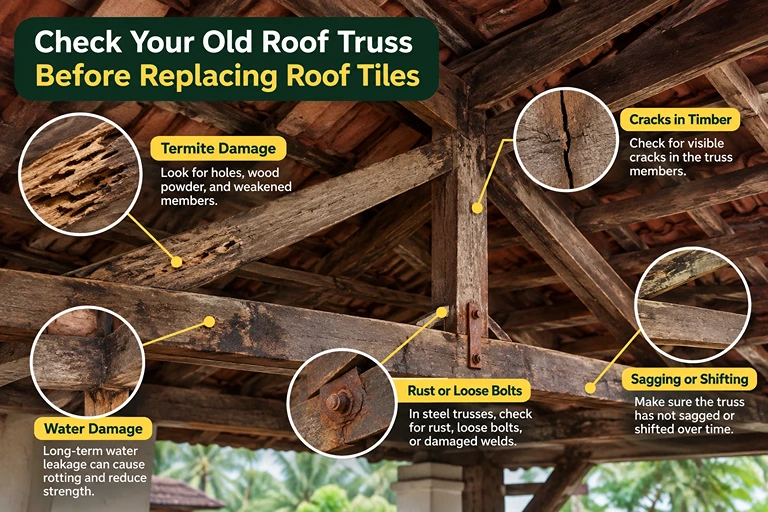
In older wooden roof trusses, termite damage, rotting timber, cracks, and weakened joints are common concerns. Water leakage over several years can also affect the condition of wooden members.
For steel roof trusses, rust, loose bolts, damaged welds, and bent structural members may indicate problems.
It is also important to check whether the truss has sagged or shifted over time.
A proper structural inspection should assess the main truss members, joints, supports, and connections. The engineer should also consider the complete new roofing system, not just the weight of individual tiles.
If the existing truss is damaged, it may need repair, strengthening, or replacement before the new roof tiles are installed.
Does Roof Slope Matter When Changing Roof Tile Types?
Yes. Roof slope is another important factor when reusing an old roof truss.
Roof slope, also called roof pitch, determines how effectively rainwater flows from the roof towards gutters and drainage outlets.
Different roof tile designs require different minimum slopes. A tile that works well on a steep roof may not provide adequate rain protection on a shallower roof.
This is particularly important in Kerala, where heavy monsoon rainfall can expose weaknesses in roof design.
If your existing roof slope is unsuitable for the new tiles, modifications may be necessary even when the old truss is structurally sound.
Always check the manufacturer’s recommended roof pitch before choosing a replacement material.
How Kerala's Climate Affects Roof Renovation
Kerala’s climate makes roof renovation different from projects in drier regions.
Heavy monsoon rainfall, high humidity, summer heat, and coastal winds can affect roofing materials and supporting structures.
During tile replacement, homeowners should pay attention to waterproofing, ventilation, roof valleys, flashing, and rainwater drainage.
For example, an old wooden truss may have experienced moisture exposure from leaking tiles. Simply installing new tiles without addressing damaged timber or drainage problems may lead to further deterioration.
Similarly, steel trusses in coastal regions may require closer inspection for corrosion.
The roof should also have suitable tile overlaps, secure fasteners, and properly designed gutters to manage rainfall.
Choosing roofing materials suited to Kerala’s weather conditions is important, but proper installation is equally essential for long-term roof performance.
When Should You Replace the Old Roof Truss?
Although keeping the existing roof truss can reduce renovation costs, complete replacement may sometimes be necessary.
A new roof truss may be required when the existing structure has serious timber decay, extensive corrosion, damaged connections, or insufficient strength to carry the proposed roofing system.
Replacement may also be the better choice when homeowners want major changes to the roof’s shape, height, or slope.
However, not every damaged truss needs complete replacement. In some cases, a structural engineer may recommend strengthening selected members, repairing connections, or replacing damaged sections.
When to Reuse, Repair, or Replace an Old Roof Truss
| Existing Truss Condition | Recommended Action | Reason |
|---|---|---|
| Strong and well-maintained | Reuse if approved | May safely support compatible roofing materials |
| Minor timber or steel damage | Repair if feasible | Localised defects may be repairable |
| Insufficient capacity for new tiles | Strengthen or replace | The new roof may require greater structural capacity |
| Severe rust, termite damage, or decay | Consider replacement | Structural strength may be compromised |
| Major change in roof slope or design | Reassess or replace | The old framework may not suit the new layout |
Note: These are general guidelines, not a structural diagnosis. A qualified structural engineer must decide whether the existing truss can be reused, strengthened, or replaced.
The decision should consider structural safety, the extent of repairs, renovation costs, and the expected future performance of the roof.
Avoid making structural changes without professional guidance, as removing or modifying truss members can affect the stability of the entire roof.
Is It Cheaper to Reuse an Old Roof Truss?
Reusing an existing roof truss can be more economical than replacing the entire structure, especially when the truss is in good condition.
Keeping the existing framework may reduce demolition, material, and labour expenses.
However, the final cost depends on the condition of the truss and the roofing material selected.
If the old structure requires extensive strengthening, the overall renovation cost may increase significantly. In some situations, installing a new truss may provide better long-term value than carrying out repeated repairs.
When planning your budget, consider the cost of roof tiles, structural repairs, installation, battens or purlins, fasteners, waterproofing, gutters, and labour.
The goal should be to achieve a safe and durable roof rather than simply choosing the lowest initial renovation cost.
How to Choose the Right Roofing Material for Your Existing Truss
Choosing new roof tiles requires a balance between appearance, structural compatibility, weather protection, and maintenance.
For older Kerala homes, the selected material should work with the existing roof slope and structural framework while providing suitable protection against rainfall and heat.
It is also important to compare product weight, fixing methods, durability, and installation requirements before purchasing.
With over 40 years of roofing experience, Asian Roof brings together roof tiles and other roofing materials under one brand, supporting residential, commercial, and bulk roofing requirements. Its Kerala-focused guidance considers rainfall, heat, roof slope, and drainage when helping customers compare materials.
Common Mistakes to Avoid During Roof Tile Replacement
One of the most common mistakes homeowners make is assuming that an old roof truss can support any new roofing material.
A truss designed for one type of roof may not automatically be suitable for another.
Another mistake is selecting tiles based only on colour or appearance without considering their weight and installation requirements.
Ignoring small leaks, damaged timber, corrosion, and poorly maintained gutters can also create problems after renovation.
Some homeowners try to reduce costs by skipping structural inspections. However, identifying weaknesses before installation can help prevent expensive repairs later.
A properly planned renovation should address both the visible roofing materials and the underlying structure.
Frequently Asked Questions
❓Can I replace clay roof tiles without changing the old truss?
Yes, you may be able to replace clay tiles without changing the existing truss if the structure is strong and suitable for the new roofing material. A professional structural assessment is recommended before installation.
❓Can an old wooden roof truss support modern roof tiles?
An old wooden truss may support modern roofing tiles if it is free from serious damage and has sufficient load capacity. The weight and installation requirements of the replacement tiles must be checked.
❓Are lightweight roofing tiles better for old roof trusses?
Lightweight roofing tiles may reduce the load on an existing roof structure. However, proper fastening, structural support, and wind resistance remain important.
❓Can a damaged roof truss be repaired instead of replaced?
In some cases, damaged roof trusses can be repaired or strengthened. The appropriate solution depends on the extent of damage and should be determined by a qualified structural engineer.
❓Is it safe to change roof tiles during Kerala's monsoon?
Roof tile replacement during heavy rainfall can be difficult because removing old tiles exposes the building to water. Planning the work during a suitable dry-weather period is generally preferable, with temporary protection available if rain occurs.
You can keep the old roof truss when changing roof tile types, but only if the existing structure is safe and suitable for the new roofing system.
Factors such as truss strength, roofing material weight, roof slope, drainage, and Kerala’s weather conditions should all be considered before starting renovation work.
Reusing a sound roof truss can help reduce unnecessary construction costs, while repairing or replacing a damaged structure can prevent future safety and maintenance problems.
By choosing compatible roofing materials and arranging a proper structural inspection, homeowners can achieve a roof renovation that improves appearance, weather protection, and long-term performance.
Planning to Change Your Roof Tiles?
Not sure whether your old roof truss can support new roofing tiles? Asian Roof brings over 40 years of roofing experience and a wide range of roofing materials suited to Kerala's climate.
Explore roofing options for your home renovation and choose materials that suit your roof structure, style, and budget.
Explore Roofing Solutions at Asian Roof →