


Choosing roof tiles for a Kerala home is not only a design decision. The roof must handle intense sunlight, high humidity, heavy monsoon rain, and long periods of moisture without making the rooms below uncomfortably hot.
For most Kerala homes, well-fired clay or terracotta roof tiles are among the best choices for hot weather. Their natural thermal properties, combined with a ventilated roof structure, can reduce heat transfer into the building. Ceramic-coated tiles and light-colored concrete tiles can also perform well when lower water absorption, modern finishes, or greater structural strength are required.
The right tile, however, depends on more than the material. Roof slope, ventilation, color, underlay, building location, and installation quality all influence how cool and durable the roof will be.
Quick Answer: Which Roof Tile Is Best for Kerala Heat?
For a sloped residential roof in Kerala, clay or terracotta tiles usually offer the best balance of heat control, appearance, and climate suitability.
A practical recommendation would be:
1. Clay or terracotta tiles for natural cooling and traditional or tropical-style homes
2. Ceramic-coated tiles for lower water absorption and a cleaner modern finish
3. Light-coloured concrete tiles for strength and contemporary roof designs
4. Insulated roofing systems for rooms located directly below the roof
The tile should always be installed with proper ventilation, waterproof underlay, adequate overlap, and a roof slope suitable for Kerala’s monsoon
Why Kerala Homes Need Climate-Suitable Roof Tiles
Kerala’s roofing conditions are different from those in dry or low-rainfall regions. A roof may remain exposed to strong sunlight for several hours and then face heavy rain, moisture, and humid air.
An unsuitable roof can lead to:
1. Excess heat inside bedrooms and upper-floor rooms
2. Water leakage during heavy rain
3. Moss, algae, and fungal growth
4. Cracking or fading of tiles
5. Heat buildup under poorly ventilated roofs
6. Higher dependence on fans and air conditioning
7. Frequent repair and replacement costs
A good Kerala roofing tile should therefore provide heat resistance, low water absorption, durability, and compatibility with heavy rainfall.
Best Roof Tiles for Hot Weather in Kerala
- Clay Roof Tiles
Clay tiles remain one of the most practical roofing choices for Kerala’s warm and humid climate.
Clay does not transfer heat as rapidly as uninsulated metal roofing. When clay tiles are installed over a properly ventilated roof structure, the air gap below the tiles helps reduce direct heat transfer into the rooms.
Why clay tiles work well in Kerala
1. Naturally suited to hot and humid climates
2. Supports better airflow below the roof
3. Complements Kerala’s traditional and modern architecture
4. Retains its natural colour for a long time
5. Can provide good thermal comfort
6. Suitable for sloped residential roofs
The quality of clay tiles can vary significantly. Poorly fired tiles may absorb too much water, crack, or develop moss quickly. Homeowners should check tile strength, firing quality, shape consistency, and water absorption before purchase.
Consulting an experienced roof tile supplier in Kerala can help you compare tile profiles based on climate, roof design, and project requirements.
- Terracotta Roof Tiles
Terracotta tiles are also made from natural clay but are often selected for their refined finish, rich color, and architectural character.
They are especially suitable for homes with sloped roofs, verandas, courtyards, and tropical design elements.
Benefits of terracotta tiles
1. Good natural thermal performance
2. Attractive earthy finish
3. Suitable for both contemporary and heritage-style homes
3. Can remain visually appealing for many years
4. Performs well when used with ventilation and waterproofing
Terracotta is a good option for homeowners who want a roof that improves both indoor comfort and exterior appearance.
- Ceramic-Coated Roof Tiles
Ceramic-coated tiles are useful for projects where homeowners require a smoother finish, better color consistency, and lower surface water absorption.
Their glazed or coated surface may also make cleaning easier in humid or rain-prone locations.
Why ceramic-coated tiles may be suitable
1. Available in multiple colours and finishes
2. Lower surface porosity in quality products
3. Better resistance to staining
4. Suitable for modern home elevations
5. Light-coloured options can reduce heat absorption
The coating quality should be checked carefully. A surface finish alone does not guarantee long-term performance if the base tile is weak or poorly manufactured.
- Concrete Roof Tiles
Concrete roof tiles are strong, durable, and available in a wide range of profiles. They are commonly chosen for modern residential projects where homeowners want defined shapes, uniform finishes, and structural strength.
However, concrete tiles are heavier than clay tiles. The roof structure must be designed to support their weight safely.
Advantages of concrete roof tiles
1. Strong and impact-resistant
2. Good performance during heavy rainfall
3. Available in modern profiles and colours
4. Offers better rain-noise control than thin metal sheets
5. Suitable for larger or contemporary roofs
For hot locations, lighter colors and heat-reflective coatings are preferable. Proper ventilation and insulation should also be included because concrete may retain heat longer than clay.
- Cool Roof and Reflective Tiles
Cool roof tiles are designed to reflect a greater amount of sunlight and release absorbed heat more effectively.
These tiles may be useful for:
1. Homes with limited natural shade
2. Buildings receiving direct afternoon sunlight
3. Upper-floor bedrooms
4. Flat or exposed sites
5. Energy-conscious home designs
Cool roof performance depends on color, reflectivity, coating quality, surface condition, and maintenance. Dust, dirt, and algae may reduce reflectivity over time, making periodic cleaning necessary.
Clay, Terracotta, Ceramic, or Concrete: Which Should You Choose?
Requirement | Recommended option | Reason |
Natural cooling | Clay or terracotta | Better passive heat control |
Traditional Kerala-style roof | Clay or terracotta | Matches sloped and tropical architecture |
Modern appearance | Ceramic-coated or concrete | More uniform profiles and colours |
Heavy-rain exposure | Low-absorption tile with proper underlay | Reduces moisture-related problems |
Coastal location | Securely fixed tile roofing system | Better protection against wind movement |
Bedroom directly below roof | Clay tiles with insulation and ventilation | Reduces heat transfer more effectively |
Strong structural roof | Concrete tiles | Suitable where weight is properly supported |
No tile should be chosen based only on appearance. Climate, roof design, structural capacity, and installation method must all be considered.

Which tile color is best for reducing heat?
Lorem ipsum dolor sit amet, consectetur adipiscing elit. Ut elit tellus, luctus nec ullamcorper mattis, pulvinar dapibus leo.
Which tile color is best for reducing heat?
Light-colored roof tiles usually absorb less heat than very dark tiles.
Suitable heat-conscious colors include the following:
1. Light terracotta
2. Beige
3. Cream
4. Pale grey
5. White-toned finishes
6. Light brown
Dark charcoal, black, and deep brown roofs may absorb more solar heat, especially on buildings with limited insulation.
Color alone, however, is not enough. A light-colored tile on a poorly ventilated roof may still create uncomfortable indoor temperatures.
For better heat control, combine the tile with:
1. A ventilated air gap
2. Reflective underlay
3. Roof insulation
4. Ridge ventilation
5. Higher ceilings
6. Adequate roof overhang
7. Shading around exposed walls and windows
Best Roof Tiles for Different Parts of Kerala
Kerala does not have the same roofing conditions in every location. Tile selection should reflect the site environment.
Hot inland areas
Locations with strong daytime heat may benefit from clay or terracotta tiles with good ventilation.
High-rainfall regions
Tiles with low water absorption, proper overlap, waterproof underlay, and efficient drainage are essential.
Coastal areas
Coastal homes may face stronger winds, salt exposure, and moisture. Tile fastening, clips, screws, and roof-edge detailing require additional attention.
High-range and cooler areas
In cooler locations, heat reduction may be less important than moisture resistance, fog exposure, and protection from prolonged dampness.
This is why selecting the best roofing tiles for Kerala homes should begin with the building location and roof design rather than a single product recommendation.
What Should You Check Before Buying Roof Tiles?
- Water Absorption
Tiles that absorb too much water may become heavier during the monsoon and may be more vulnerable to moss, staining, and long-term damage.
Ask the supplier whether water-absorption information is available for the selected tile.
- Tile Strength
Tiles should be strong enough to withstand transportation, installation, maintenance work, and normal environmental exposure.
Check for cracks, uneven firing, weak edges, or inconsistent shapes.
- Size and Shape Consistency
Tiles with inconsistent dimensions may create gaps, uneven overlaps, and leakage risks.
Uniformity is especially important for large roofs.
- Roof Slope Compatibility
Each tile profile requires an appropriate roof slope. A tile that performs well on a steep roof may not be suitable for a low-slope roof.
Confirm the recommended slope before installation.
- Weight
Clay, terracotta, ceramic, and concrete tiles have different weights.
The roof frame and building structure should be designed accordingly. Heavy tiles should not be installed without structural evaluation.
- Availability of Replacement Tiles
Roof tiles may need replacement after accidental damage or future renovation.
Choose a supplier who can provide matching replacement tiles or commonly available profiles.
- Installation Support
A quality product can fail when installation is poor. Ask whether technical guidance, fixing recommendations, and installation details are available.
Common Roof-Tile Mistakes in Kerala Homes
Many roofing problems are not caused by the tile material itself. They result from incorrect design or installation.
Common mistakes include:
1. Choosing tiles only by colour
2. Ignoring the required roof slope
3. Installing tiles without waterproof underlay
4. Insufficient overlap between tiles
5. Poorly designed valleys and ridges
6. No ventilation below the roof
7. Weak battens or roof supports
8. Improper fixing in windy areas
9. Mixing tiles with inconsistent dimensions
10. Using dark tiles without insulation on exposed roofs
These mistakes can cause leakage, heat buildup, tile movement, and premature repairs.
Roof Tile or Metal Sheet: Which Is Cooler?
Roof tiles generally provide better natural heat control than uninsulated metal sheets.
Metal heats up quickly under direct sunlight. Without insulation, reflective coating, or a false ceiling, rooms below a metal roof may become uncomfortable.
Clay and terracotta roofs usually perform better because
- The material transfers heat more slowly
- The tile arrangement can create air gaps
- Sloped tile roofs support ventilation
- The roof mass helps reduce sudden temperature changes
Insulated metal roofing can still perform well, particularly for lightweight structures. The correct decision depends on the building type, budget, structure, and expected lifespan.
How to Improve the Cooling Performance of a Tile Roof
The tile is only one part of the roofing system
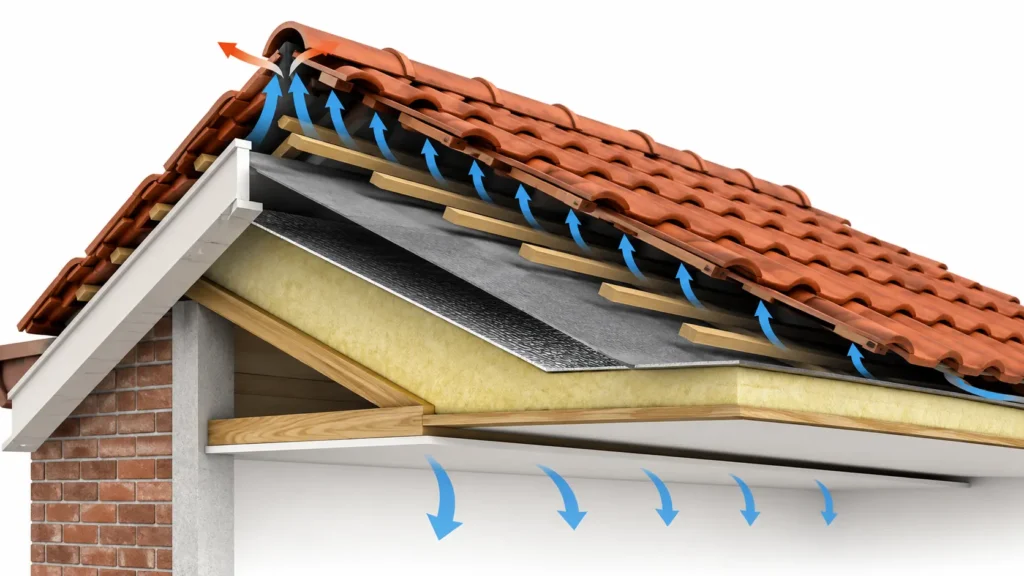
For better indoor comfort:
1. Use high-quality tiles with consistent dimensions
2. Select lighter colours where suitable
3. Provide ventilation below the tiles
4. Install waterproof and reflective underlay
5. Use insulation above bedrooms
6. Include ridge vents where appropriate
7. Design wider roof overhangs
8. Ensure proper rainwater drainage
9. Plant shade trees without creating roof-damage risks
10. Maintain the roof regularly
A correctly designed roofing system can provide better results than choosing an expensive tile without proper installation.
Frequently Asked Questions
Which roof tile keeps a Kerala home coolest?
Clay and terracotta tiles are usually among the best choices for natural heat reduction. Their performance improves when the roof includes ventilation, insulation, and a suitable air gap.
Are clay roof tiles suitable for Kerala’s monsoon?
Yes. Quality clay tiles can perform well during heavy rain when installed with the correct roof slope, overlap, underlay, ridge protection, and drainage.
Are ceramic tiles better than clay tiles?
Ceramic-coated tiles may offer a smoother finish, lower surface water absorption, and more color options. Clay tiles may provide a more natural appearance and good passive thermal performance.
Are concrete roof tiles suitable for hot weather?
Yes, especially when light-colored or reflective finishes are used. Because concrete is heavier and may retain heat longer, structural support, insulation, and ventilation are important.
Which roof tile color absorbs less heat?
Light colors such as cream, beige, pale gray, and light terracotta generally absorb less heat than dark charcoal or black.
Do roof tiles reduce electricity use?
Heat-resistant roof tiles and a properly ventilated roofing system may reduce indoor heat gain. This can lower the need for fans and air conditioning, although actual savings vary by building design.
Final Recommendation
For most hot-weather homes in Kerala, clay and terracotta tiles remain dependable choices because they combine natural thermal performance with suitability for sloped, rain-resistant roofing.
Ceramic-coated tiles are appropriate when homeowners need lower surface water absorption, easier cleaning, and more finish options. Concrete tiles are suitable for structurally designed modern homes where strength and profile consistency are priorities.
Before choosing, evaluate:
1. Local heat and rainfall
2. Coastal or inland exposure
3. Roof slope
4. Tile weight
5. Water absorption
6. Ventilation
7. Structural capacity
8. Installation method
7. Replacement availability
8. Long-term maintenance
Asian Roof helps homeowners, builders, and architects compare roofing options based on climate, building design, and project needs. Speak with an experienced roof tile supplier in Kerala to select a suitable roof tile system for your home.
Need help choosing the right roof tile for your Kerala home? Contact Asian Roof for expert guidance based on your location, roof design, budget, and climate needs.